I Overengineered a Croissant Using Materials Engineering | The Science…



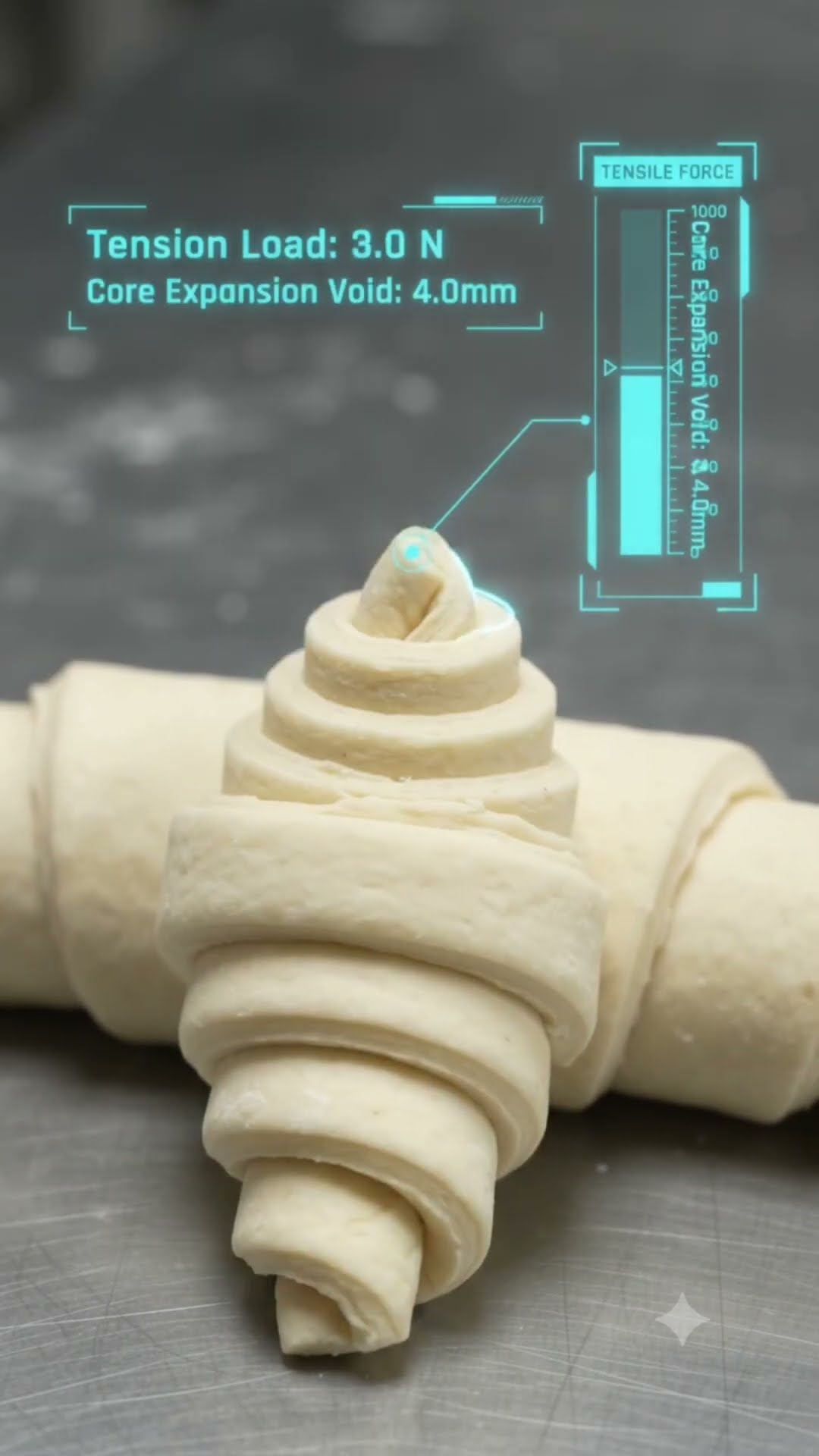
I calculated 1,024 layers just to make a single croissant.
Dough and butter temperature, material properties, repeated lamination, structural stability between layers, gas expansion during proofing, moisture evaporation, and heat transfer inside the oven.
A croissant’s delicate, crispy layers don’t appear simply because the dough is folded several times.
If the butter is too cold, the layers fracture.
If it becomes too soft, it smears into the dough.
And once the temperature or thickness falls out of range, the entire laminated structure begins to collapse.
So instead of relying on instinct, we engineered this croissant around temperature, thickness, deformation, tension, and thermal expansion.
The moment it enters the oven, moisture trapped between the layers turns into steam and expands.
That pressure separates the ultra-thin sheets of dough, creating the open honeycomb structure we recognize inside a properly laminated croissant.
In the end, all we really needed was flour and butter.
But explaining why it works required materials engineering.
Far more serious than necessary.
Surprisingly useful once you understand it.
Useless Cooking Science
Comments 0
No comments yet. Be the first!