Why Doesn’t a 5 cm Soufflé Pancake Collapse? | The Science of Viscoela…



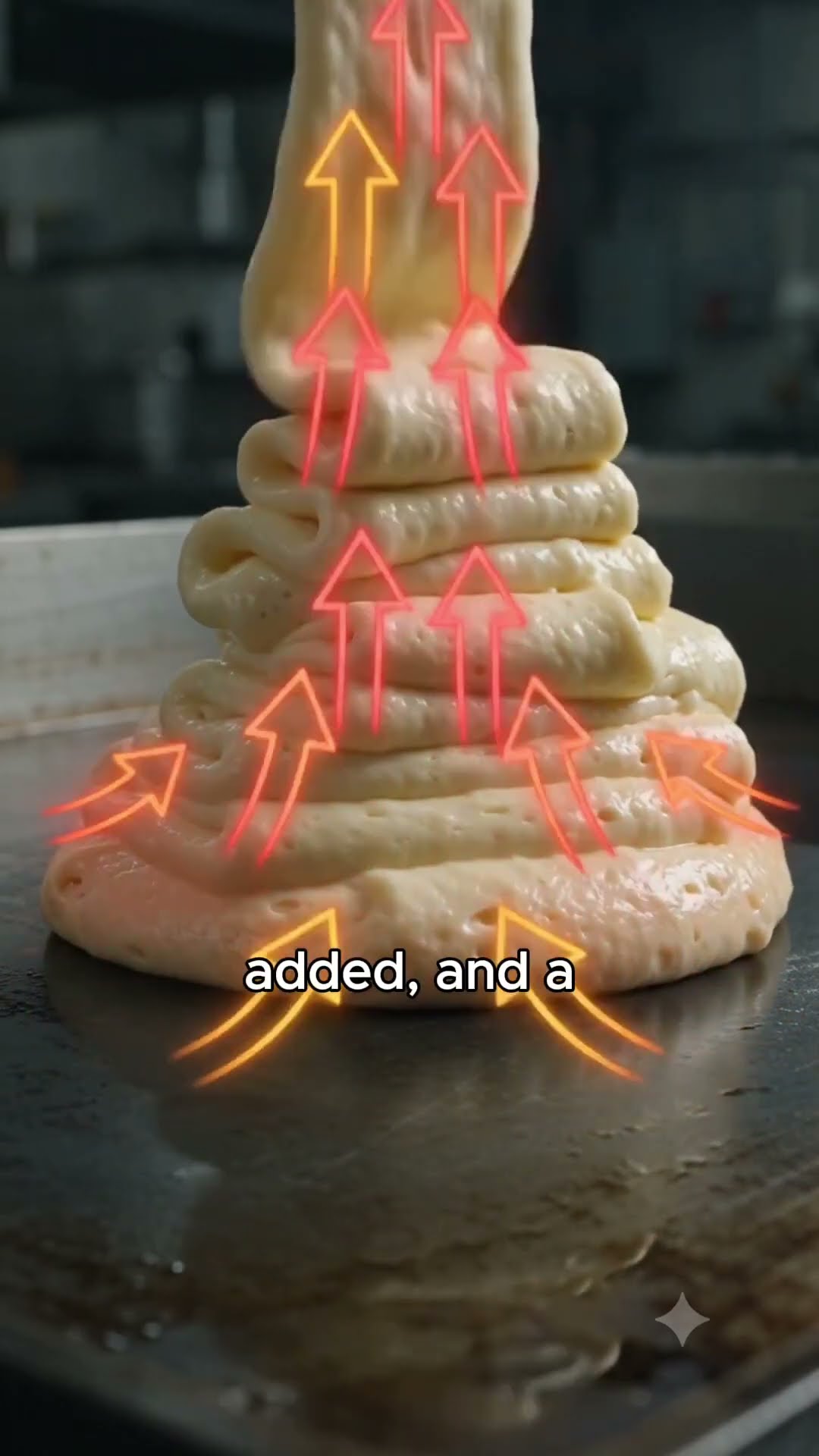
How can a soufflé pancake rise to 5 centimeters without immediately collapsing?
This time, instead of treating it as just another pancake recipe, we analyzed it through foam stability, protein denaturation, viscoelasticity, and thermal expansion.
When egg whites are whipped, the proteins begin to unfold and surround countless microscopic air bubbles.
But simply incorporating more air isn’t enough.
If the bubbles are too large, the foam films are too weak, or the batter lacks sufficient viscosity, the entire structure can collapse as soon as heat is applied.
So in this experiment, we tracked the density of the egg-white foam, air incorporation, batter viscoelasticity, bubble size, heating rate, and heat-induced protein coagulation.
As heat moves through the batter, the trapped air and water vapor expand, pushing the pancake upward.
At the same time, the protein network sets under heat and stabilizes the expanded bubble structure, allowing the soufflé pancake to stay tall, soft, and incredibly fluffy.
In the end, all we really needed were eggs and a pan.
But explaining how a pancake rises 5 centimeters required food engineering and viscoelasticity.
Far more serious than necessary.
Surprisingly useful once you understand it.
Useless Cooking Science
Comments 0
No comments yet. Be the first!