I Used Thermodynamics to Make Korean Salt Bread | Where Did the Butter…



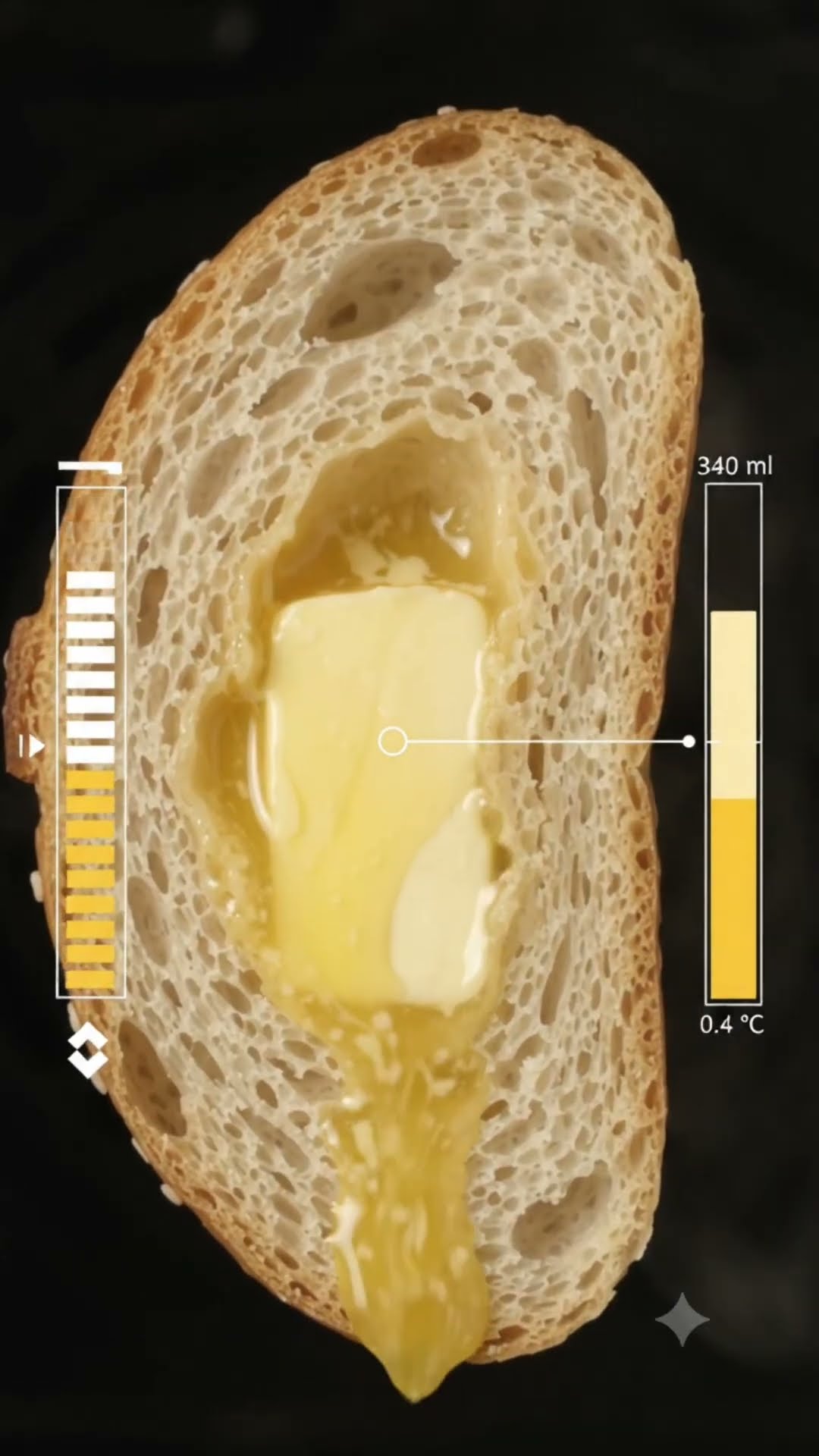
We put a whole piece of butter inside the bread.
But after baking, we cut it open and find something strange:
the butter is gone.
In its place is a long hollow cavity.
So where did the butter actually go?
This time, we overengineered Korean salt bread by tracking heat transfer, gluten viscoelasticity, fat migration, water vaporization, steam expansion, and browning.
First, an elastic gluten network is developed in the dough and a cold butter core is sealed inside.
During fermentation, carbon dioxide produced by yeast expands the internal structure.
Then the bread enters the oven.
Before the dough structure fully sets, the butter begins to melt.
The liquid fat moves downward through gravity and microscopic pathways within the dough.
But butter isn’t made of fat alone.
Its water content heats up and turns into steam.
Together with gases already trapped in the dough, that expanding vapor helps open the internal structure and form the long cavity left behind.
Meanwhile, the melted butter that travels downward collects between the bread and the hot baking surface.
There, it effectively fries the bottom of the bread.
As moisture disappears and surface temperature rises, browning accelerates and a deep, crisp, buttery crust develops.
So the butter never really disappeared.
It melted.
It moved.
Its water became steam.
And the remaining fat helped fry the bottom crust.
Did we really need thermodynamics to explain one piece of salt bread?
Probably not.
But we did it anyway.
Far more serious than necessary.
Surprisingly useful once you understand it.
Useless Cooking Science
Comments 0
No comments yet. Be the first!