I Overengineered Fried Chicken Using Thermodynamics | Why 180°C Matter…



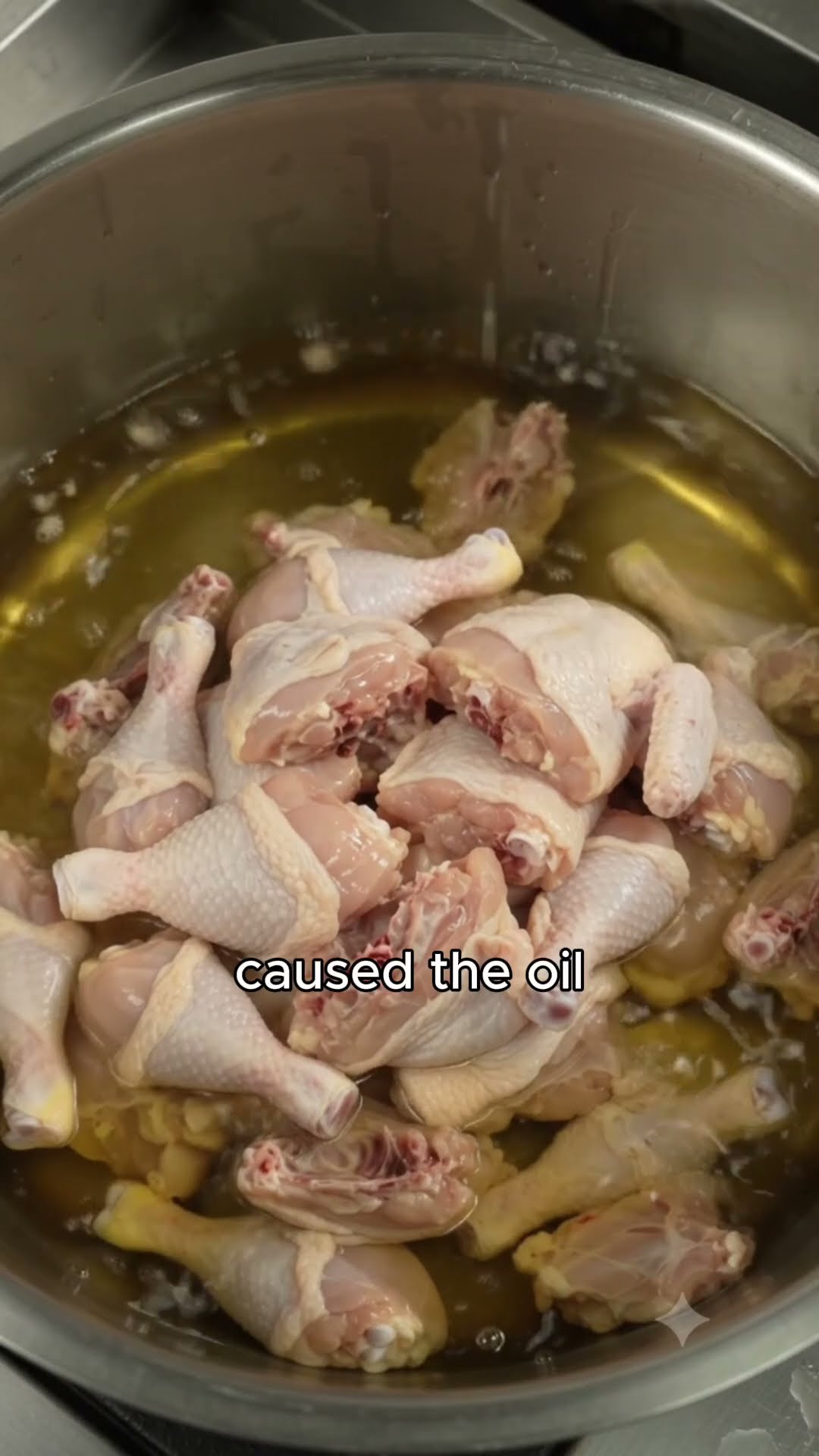
What actually makes fried chicken crispy?
This time, instead of simply dropping chicken into hot oil and hoping for the best, we analyzed the process through thermodynamics, moisture evaporation, steam pressure, starch structure, and the Maillard reaction.
The moment chicken enters 180°C oil, moisture at the surface rapidly turns into steam.
Thousands of tiny bubbles escape through the coating, creating the porous structure that eventually becomes a crisp crust.
But there’s a problem.
Add too much chicken at once, and the oil temperature can crash.
Steam production slows down, oil begins penetrating the coating, and the crust starts heading toward the one thing we absolutely do not want:
soggy fried chicken.
So we activate the double-fry protocol.
After a short resting period allows excess surface moisture to escape, the oil is reheated and the chicken is fried again at a higher temperature.
The remaining moisture is driven out, Maillard browning accelerates, and the starch-rich coating transitions into a rigid, glassy, crispy structure.
The final result:
a thin, porous crust,
a loud crunch,
and juicy chicken underneath.
Did we really need thermodynamics just to fry chicken?
Probably not.
But we did it anyway.
Far more serious than necessary.
Surprisingly useful once you understand it.
Useless Cooking Science
#FriedChicken #CrispyChicken #CookingScience #FoodScience #Thermodynamics #FryingScience #MaillardReaction #CookingASMR #FoodEngineering
Comments 0
No comments yet. Be the first!