I Used the Leidenfrost Effect to Cook a Steak | The Science of 300°C S…



Do you really need the Leidenfrost effect to cook a steak?
Probably not.
But we tested it anyway.
This time, we take a 5-centimeter-thick aged ribeye and analyze what happens when it meets a pan heated to 300°C.
At extreme surface temperatures, water doesn’t simply evaporate on contact.
A thin vapor layer forms underneath it, allowing droplets to glide rapidly across the pan — the Leidenfrost effect.
Then the ribeye enters the 300°C heat zone.
The instant the meat touches the surface, moisture rapidly vaporizes while intense conductive heat begins building the crust.
At the same time, Maillard reactions accelerate and rendered beef fat begins producing hot vapor around the pan.
But there’s a problem.
When those fat vapors ignite, the temperature can rise far beyond what we need for a perfect crust.
Leave it there too long, and searing turns into carbonization.
So the steak is immediately lifted away from direct conductive heat and moved into a lower-intensity radiant heat zone.
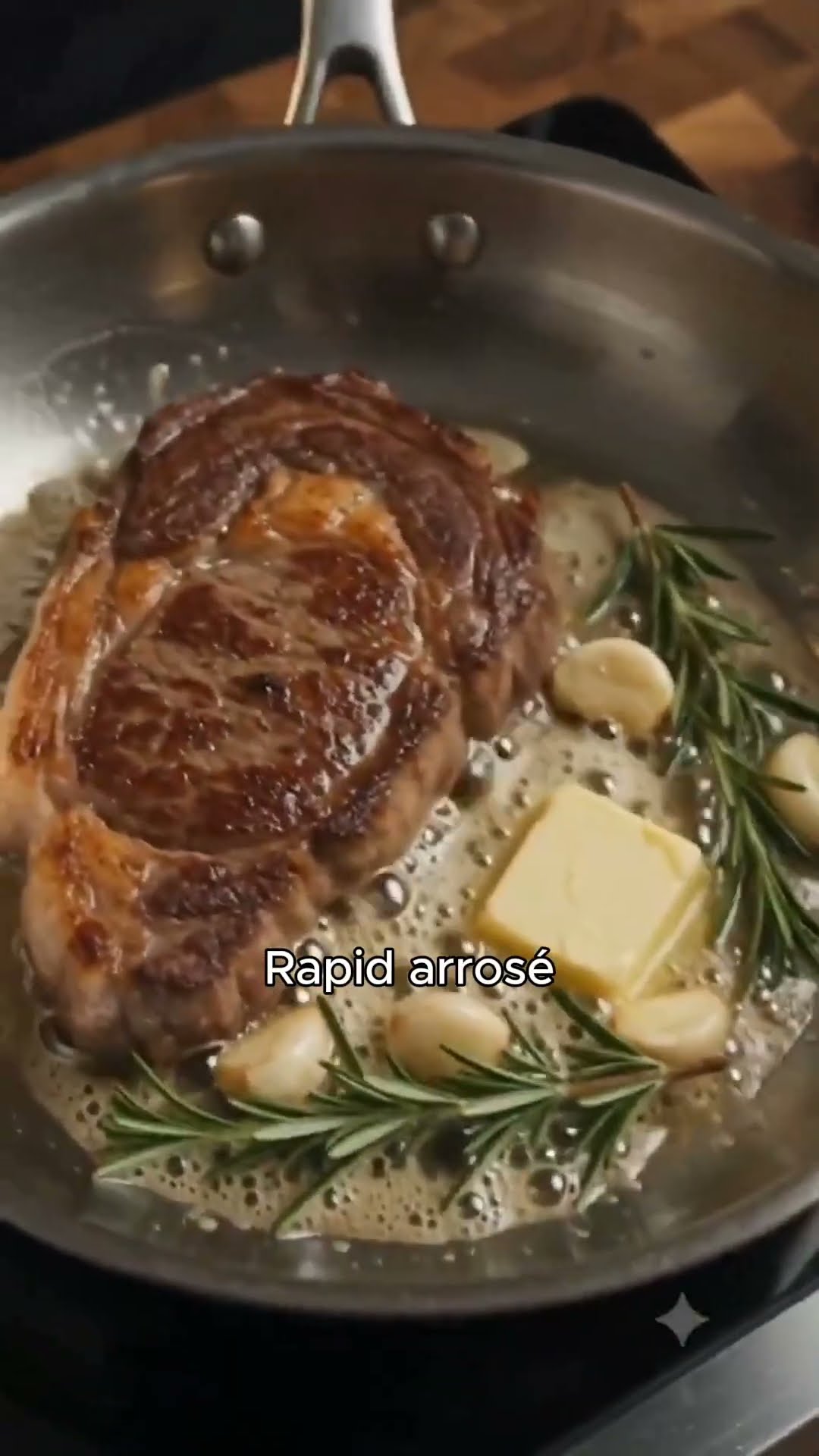
Butter and rosemary are then added for a rapid arroser-style baste, coating the surface with hot aromatic fat.
After cooking, the steak rests while the core stabilizes around 54°C.
Finally, we cut through the crust and inspect the contrast between the deeply seared exterior and the vivid medium-rare center.
All we really needed was a steak and a hot pan.
But explaining what happened required thermodynamics, fluid dynamics, heat transfer, and the Leidenfrost effect.
Far more serious than necessary.
Surprisingly useful once you understand it.
Useless Cooking Science
Comments 0
No comments yet. Be the first!